
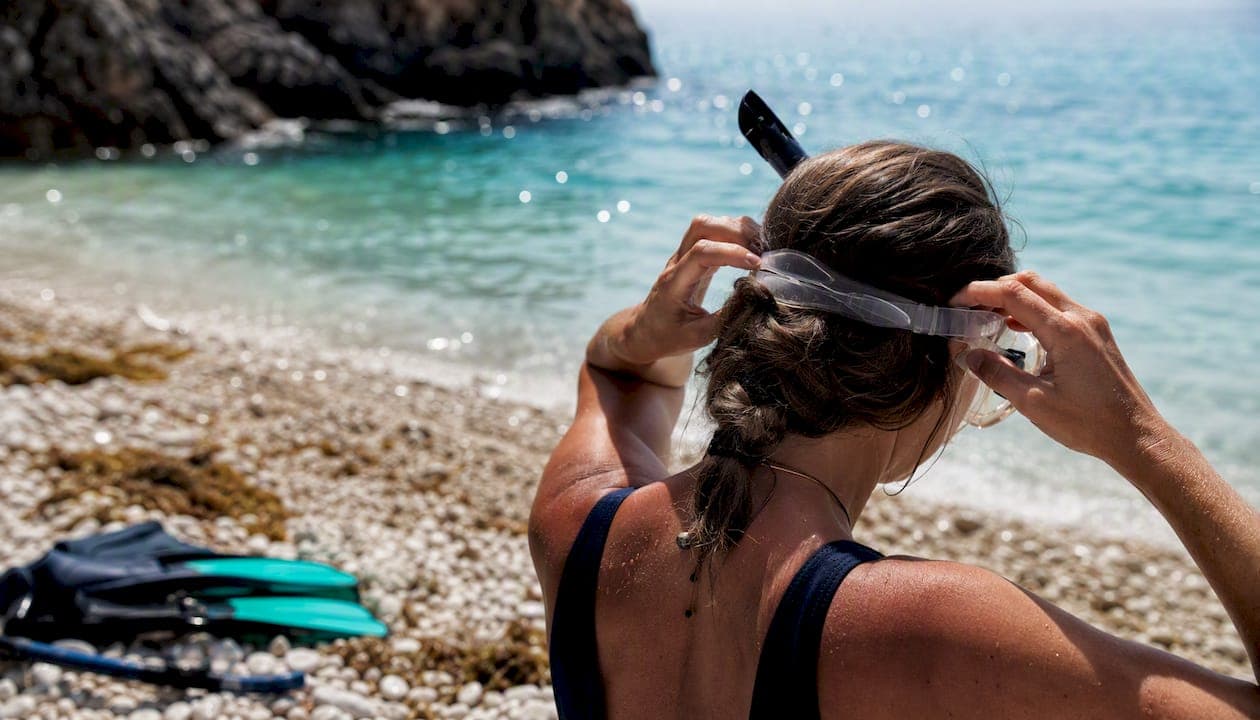
Yes — most people can snorkel comfortably on their very first try. The key is fitted gear, calm water, and a buddy beside you. Before you wade in, run through this quick checklist:
- Mask fit: Press the mask to your face, inhale through your nose, and let go. It should hold without the strap.
- Snorkel type: Choose a dry or semi-dry snorkel to reduce water entry.
- Fins fit: Fins should feel snug but not painful; no heel slippage.
- Flotation option: Pack a snorkel vest if you're unsure of your swimming confidence.
- Conditions check: Look for calm, sheltered water with low wind and good visibility.
- Buddy plan: Agree on a meeting point, hand signals, and a turn-back time before you enter.
Your first 10–30 minutes will feel a little strange. Breathing through a tube with your face underwater is unfamiliar, and that's normal. Give yourself five minutes of slow, deliberate breaths at the surface before you go anywhere. Once your body relaxes into the rhythm, the underwater world opens up.
Key Takeaways
Snorkeling for beginners goes smoothly when you fit your gear correctly, practice clearing in shallow water, and choose a calm, guided location for your first open-water session.
| Point | Details |
|---|---|
| Mask fit is everything | Press to face, inhale through nose — if it holds without the strap, the seal is good. |
| Practice before open water | A 15-minute pool drill covering breathing, blast clears, and kicking builds real confidence. |
| Buddy system, every time | Agree on signals, a meeting point, and a turn-back time before you enter the water. |
| Read conditions from shore | Look for foam moving seaward, choppy channels, or discolored water before committing to an entry. |
| Desboattours for guided starts | The Sarandë snorkeling boat tour includes gear and beginner-friendly stops along the Albanian Riviera. |
Table of Contents
- What snorkeling gear do beginners actually need?
- How do you fit a mask and keep it fog-free?
- How to practice snorkeling before you go offshore
- How do you choose a beginner-friendly snorkeling spot?
- What are the core safety rules for snorkeling?
- How do you recognize dangerous currents from shore?
- Your step-by-step first-time snorkeling routine
- Common beginner mistakes and how to fix them fast
- How to enter and exit the water safely
- What first-timers often underestimate about snorkeling
- Ready to snorkel the Albanian Riviera?
- Sources
What snorkeling gear do beginners actually need?
A basic snorkel setup — mask, snorkel, and fins — covers everything most first-timers need. Here's what each piece does and what to look for.
Mask: Your window to the reef. A silicone skirt seals better than plastic and lasts longer. Single-lens and two-lens masks both work; pick whichever fits your face shape without gaps.
Snorkel: Dry snorkels have a float valve that closes when submerged, keeping water out almost entirely. Semi-dry snorkels use a splash guard instead. Both are good for beginners. A classic J-tube is cheaper but lets water in freely, which means more clearing practice.
Fins: Full-foot fins slip on like shoes and work well in warm water. Open-heel fins pair with neoprene booties and offer more adjustability, which is useful if you're traveling or sharing gear. Shorter, softer blades are easier on the legs for new snorkelers.
Optional extras: A snorkel vest adds buoyancy without restricting movement. A rash guard or thin wetsuit protects against sun and minor scrapes. Neoprene socks prevent fin blisters on longer sessions.
Rent or buy?
Renting is perfectly fine for a one-off trip. Guided tours like those run by Desboattours include snorkeling gear, so you don't need to pack anything. If you snorkel more than two or three times a year, owning a mask and snorkel pays off quickly — rental masks often fit poorly, and a poor fit is the top cause of leaks. Fins are bulkier to travel with, so renting those makes sense even for regular snorkelers.
| Gear | Comfort | Cost | Travel-Friendly |
|---|---|---|---|
| Dry snorkel | High — minimal water entry | Mid-range | Yes |
| Semi-dry snorkel | Good — splash guard only | Budget-friendly | Yes |
| Full-foot fins | Good in warm water | Low to mid | Bulky |
| Open-heel fins + booties | Adjustable, versatile | Higher | Very bulky |
| Snorkel vest | Excellent for nervous swimmers | Low | Compresses small |
Pro Tip: Choose a snorkel with a soft, pliable mouthpiece. A stiff bite piece causes jaw fatigue within 20 minutes — a common reason beginners cut sessions short.
How do you fit a mask and keep it fog-free?
A well-fitted mask is the single most important factor in preventing leaks. The fit test is simple: press the mask gently to your face without the strap, inhale through your nose, and release. If it stays put, the seal is good. If it drops, try a different size or style.
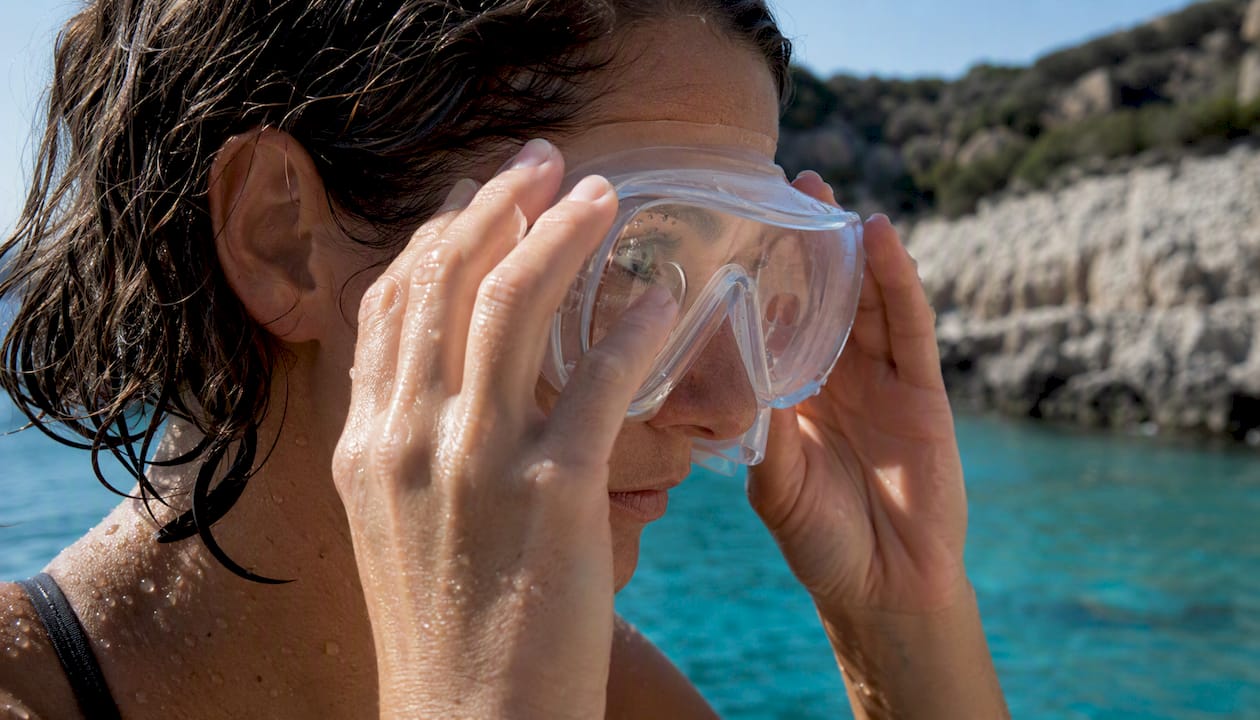
Once you have the right mask, position the strap across the widest part of your skull, not the top. Pulling the strap too tight actually breaks the seal by distorting the skirt. Snug, not strangling.
Preventing and clearing fog
New masks have a factory coating that causes fogging. Scrub the inside of the lens with a small amount of white toothpaste, rinse, and repeat two or three times before your first session. After that, apply a drop of baby shampoo or a commercial defog product before each dive, spread it around, and rinse lightly. Don't wipe it dry.
Clearing water from your snorkel: Exhale sharply and forcefully through the tube. This "blast clear" pushes water out the purge valve or up and out the top. Practice this in shallow water before heading offshore so it feels automatic when it happens for real.
Clearing your mask: At the surface, tilt your head back slightly, press the top of the mask frame against your forehead, and exhale through your nose. The air pushes water out the bottom seal. Underwater, the same technique works — press the top frame, exhale steadily, and the water drains.
- Blast clear: sharp exhale through the snorkel tube.
- Snorkel purge: if your snorkel has a purge valve at the bottom, a gentler exhale drains it.
- Mask clear at surface: press top frame, exhale through nose.
- Mask clear underwater: same motion, steady exhale, tilt head back slightly.
Pro Tip: Clip your snorkel to the left side of your mask strap so the tube curves naturally to the left corner of your mouth. This keeps the mouthpiece at a comfortable angle and reduces jaw strain.
How to practice snorkeling before you go offshore
The fastest way to build confidence is a short pool session or waist-deep water drill before you ever reach open water. Beginners who practice breathing and clearing in a pool first arrive at the reef far more relaxed.
Try this 15-minute routine:
- Minutes 1–3: Mask on, face in the water, breathe slowly through the snorkel. Focus on long exhales. Don't move yet.
- Minutes 4–8: Add fins. Practice slow, hip-driven kicks while floating face-down. Keep your knees soft, not locked.
- Minutes 9–13: Practice five blast clears in a row. Let a little water in deliberately, then clear it. Repeat until it feels boring.
- Minutes 14–15: Float on your back with fins on. Rest. This is your recovery position.
Practice with a buddy or near a lifeguard. If you're nervous about buoyancy, wear a snorkel vest for the whole drill — there's no reason not to. Test your fins for blisters during this session too. If a fin rubs, add a neoprene sock or switch sizes before you travel.
How do you choose a beginner-friendly snorkeling spot?
The right location makes or breaks a first session. Look for these characteristics:
- Sheltered bay or cove: Natural protection from wind and swell keeps the surface calm.
- Shallow entry: Waist-to-chest-deep water near shore lets you stand up if anything feels off.
- Low boat traffic: Busy channels are dangerous for surface swimmers.
- Good visibility: Clear water means you can see the bottom and spot hazards.
- Lifeguard or guided presence: Especially valuable for first-timers.
The best time to go is mid-morning on a sunny, low-wind day. Visibility is usually at its peak before afternoon winds pick up. Avoid snorkeling after heavy rain, which stirs up sediment and can push freshwater runoff into coastal areas, reducing visibility sharply.
Before you commit to a spot, ask a local guide or rental shop: How strong is the current today? Is there boat traffic in this area? What's the tide doing? What's the visibility like? A guide who hesitates to answer those questions is a guide worth finding a replacement for.
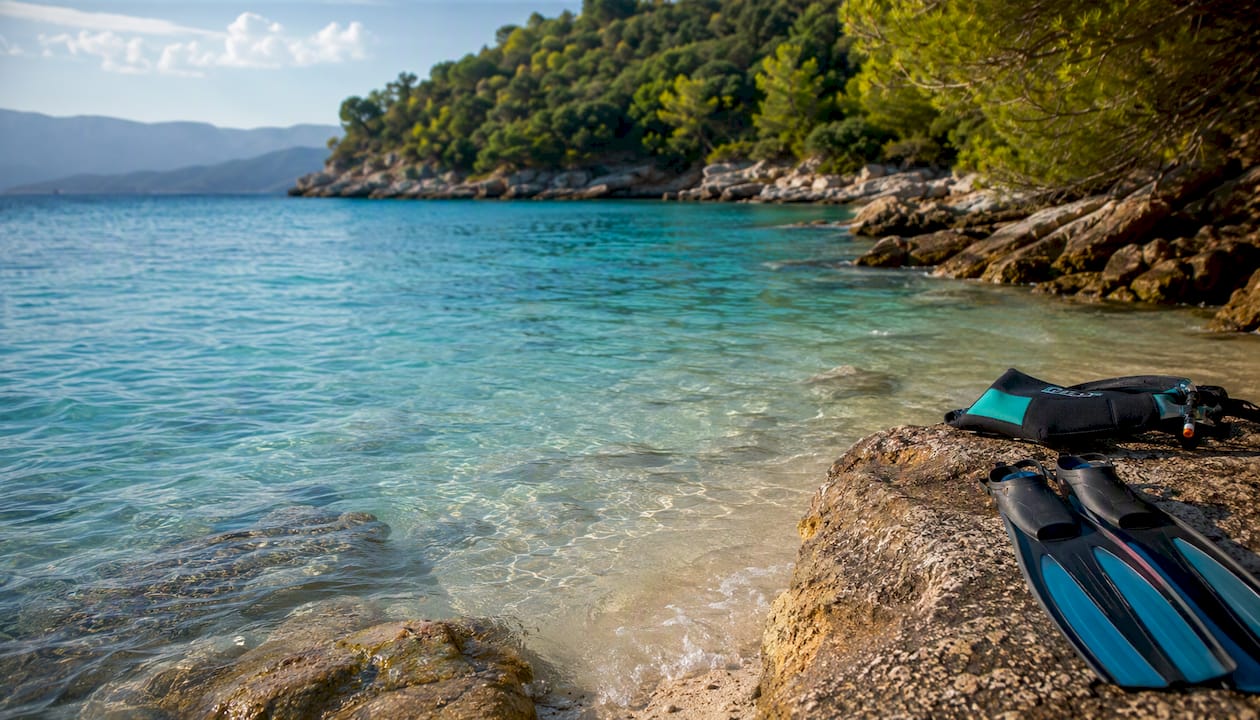
Kakome Bay snorkeling near Sarandë is a good example of what beginner-friendly looks like: sheltered, clear, and accessible by guided boat. The best beaches near Sarandë reachable by boat share similar qualities — calm water, low traffic, and stunning visibility.
What are the core safety rules for snorkeling?
Safety in the water comes down to a few habits practiced every single time.
The buddy system: Never snorkel alone. Stay within arm's reach or clear sight line of your buddy at all times. Agree on a maximum distance from shore or the boat before you enter.
Flotation: If you're not a confident swimmer, wear a snorkel vest. There's no shame in it — experienced divers use buoyancy aids regularly.
Panic protocol: If something startles you, stop moving. Lift your head above water. Breathe slowly. Signal your buddy. Inflate your vest if you have one. Quick, shallow breaths increase anxiety and fatigue; slow, deliberate breathing is the fastest way to calm down.
Cramps: Float on your back immediately. For a calf cramp, pull your toes toward your shin and hold. For a foot cramp, remove the fin if possible and massage the arch. Signal your buddy and head back to shore.
Hand signals to know:
- OK: Circle formed with thumb and index finger (or flat hand waved side to side at the surface).
- Need help: Fist raised above the water, arm waving.
- Come here: Arm extended, beckoning motion.
The do-not-touch rule: Keep your hands to yourself underwater. Touching coral breaks living organisms that took decades to grow. Touching unknown marine life risks stings, bites, or spines. Hover, watch, and leave everything exactly as you found it.
How do you recognize dangerous currents from shore?
Visual signs of rip currents include discolored water, foam or debris moving quickly seaward, and a visible channel of choppier or flatter water cutting through breaking waves. If you see any of these, choose a different entry point.
What to do if you're caught in a rip: Swim parallel to shore until you're out of the current's pull, then angle back toward the beach. Fighting directly against a strong current exhausts even strong swimmers quickly.
Tide basics:
- Low tide can expose shallow reef, making entry tricky and increasing the risk of scraping coral.
- High tide generally offers deeper, clearer water over the reef and easier entries.
- Incoming tide tends to push water toward shore, which can help tired swimmers return.
- Outgoing tide pulls water seaward — more caution needed, especially near channels.
Check local tide tables before you go. NOAA's tide prediction tool covers U.S. coastal locations and is free to use. For international destinations like Sarandë, ask your guide or tour operator for the day's tide timing.
Your step-by-step first-time snorkeling routine
Before you leave home: Test your mask and snorkel in a sink or bathtub. Pack reef-safe sunscreen, a full water bottle, a rash guard, and your buddy's phone number. Confirm your meeting spot and turn-back time.
On arrival: Scan the water for 60 seconds. Look for chop, current signs, or boat traffic. Don a rash guard and apply sunscreen before touching the water. Put fins on last, in shallow water or sitting on a step, so you don't trip walking in.
First 30 minutes: Limit your first open-water session to 20–30 minutes. Check in with your buddy every few minutes. After exiting, rinse your face and reapply sunscreen — the water reflects UV even on cloudy days.
Exit procedure: Move to shallow water before removing fins. Sit or stand in knee-deep water, remove one fin at a time, and walk backward out of the surf if there's any wave action. Rinse your mask and snorkel with fresh water immediately after. Debrief with your buddy: what did you see, what felt off, what would you do differently?
Common beginner mistakes and how to fix them fast
Most problems have a quick fix if you know what to look for.
- Fogged mask: Apply defog before entry; if it fogs mid-session, surface, rinse the lens with seawater, and reapply.
- Leaking mask: Re-seat the skirt by pressing gently around the edge. If it keeps leaking, the fit is wrong — swap masks.
- Water in snorkel: Blast clear immediately. If water keeps entering, check that the dry valve isn't stuck open.
- Jaw fatigue: Bite gently — you don't need to clench. A softer mouthpiece resolves chronic fatigue.
- Tired legs: You're kicking from the knee. Relax your knees, drive from the hip, and use long, slow strokes.
- Shortness of breath: Slow down. Quick, shallow breaths are the most common anxiety trigger in new snorkelers.
When to end a session early: Persistent gear problems, worsening weather, a cramp that won't release, or sustained fatigue are all good reasons to head back. The water will be there tomorrow.
How to enter and exit the water safely
Beach entry: Walk backward into the water with fins on, keeping your eyes on the waves. Once you're waist-deep, lower your mask, put the snorkel in your mouth, and lean forward into a float. Never dive headfirst from shore.
Rocky entry: Sit at the water's edge, put fins on while seated, then lower yourself in feet-first. Use your hands for balance on wet rock, and time your entry between wave sets.
Boat entry: Step off the swim platform or ladder feet-first, fins on. Hold your mask against your face with one hand as you enter to prevent it from being knocked off by the water impact.
Exit from beach: Surface in shallow water, stand, and remove fins before walking up the beach. Walking forward in fins on dry sand is how most people trip and fall.
Exit from rocks: Wait for a calm moment between waves, grab a secure handhold, and pull yourself up feet-first. Remove fins before climbing.
What first-timers often underestimate about snorkeling
Most guides will tell you to relax and breathe slowly. That's true, but it misses the deeper point: the biggest barrier for new snorkelers isn't technique — it's the unfamiliarity of breathing through a tube while your face is submerged. Your brain interprets that sensation as a threat, even when you're perfectly safe.
The fix isn't willpower. It's repetition. Ten minutes in a pool, practicing nothing but slow exhales through the snorkel, rewires that response faster than any pep talk. Once the breathing feels normal, everything else — clearing, kicking, watching marine life — clicks into place naturally.
For visitors coming to Sarandë, a guided boat stop takes a lot of that pressure off. Spots like Rrojdhe Cove are calm, shallow, and chosen specifically because they suit first-timers. Having gear handed to you on the boat, and a guide in the water nearby, means you can focus entirely on the experience rather than the logistics.
If you're nervous, try a guided stop before you go solo. The Sarandë snorkeling guide covers the best local spots and what to expect at each one.
Ready to snorkel the Albanian Riviera?
Snorkeling for beginners is far more rewarding when someone handles the gear, picks the spot, and keeps an eye on conditions for you. That's exactly what Desboattours does on every tour.

The Sarandë snorkeling boat tour includes snorkeling gear for every guest, curated stops at calm, clear-water sites suited to first-timers, and a local crew who knows which spots are best on any given day. Tours depart from Sarandë and visit multiple Ionian stops where the water is shallow, sheltered, and genuinely beautiful. For a quieter, more personal experience, the private boat tour lets you set the pace entirely. Book your spot through WhatsApp or online — the crew will handle everything else.
Sources
These resources cover the techniques, gear basics, and local conditions referenced throughout this guide.
"Practice clearing water from the snorkel by exhaling forcefully through the tube (the 'blast clear'); practice this in shallow water so it feels familiar when it happens in open water." — How to Snorkel: The Complete Beginner's Guide, wikiHow
Technique and gear:
- How to Snorkel: The Complete Beginner’s Guide
- Snorkeling Tips for Beginners: How to Actually Relax, Look Around, and Fall in Love with the Ocean
- Snorkeling for Beginners: A Complete Starter Guide
- Saline water and salinity — USGS
Local Sarandë resources:
Coastal water behavior: